Table of Contents
- How to Buy Celo (CELO): Quick Overview
- What Is Celo (CELO) and Why People Buy It
- Where to Buy Celo: Centralized vs. Decentralized
- Compare Top Places to Buy CELO
- How to Buy Celo on an Exchange: Step-by-Step
- Best Wallets for Celo (CELO): Custody Choices
- How to Buy Celo with Fiat: Card, Bank, P2P
- How to Buy Celo On-Chain via DEX and Bridges
- Fees, Order Types, and Timing Tips
- Safety Checklist and Common Mistakes
How to Buy Celo (CELO): Quick Overview
Want a fast way to access crypto markets? You can buy ethereum with credit card in minutes using a secure platform with transparent fees, quick processing, and a smooth user experience.
Ready to learn how to buy Celo? This guide walks you through every step, from choosing a platform and creating a wallet to minimizing fees and securing your CELO. Whether you prefer a major exchange or a decentralized exchange (DEX) on Celo’s low-fee network, you’ll find a path that fits your experience level and location. Along the way, you’ll get practical tips, a comparison of popular options, and a safety checklist so you can move with confidence.
What Is Celo (CELO) and Why People Buy It
Celo is a mobile-first, EVM-compatible blockchain designed to make digital payments fast, affordable, and accessible worldwide. CELO is the native asset used for governance and to secure the network. The Celo ecosystem also features stable assets like cUSD and cEUR that aim to provide everyday users with familiar, low-volatility currencies. People buy CELO to participate in governance, access on-chain apps, pay network fees, and support a mission focused on real-world payments and inclusion.
Before you buy, remember this is educational information, not financial advice. Always research the project, assess your risk tolerance, and confirm local regulations that may affect how to buy Celo in your region.
Where to Buy Celo: Centralized vs. Decentralized
You can buy CELO in two main ways: through a centralized exchange (CEX) or on-chain using a decentralized exchange (DEX). A CEX is usually the fastest and most beginner-friendly option for fiat on-ramps (e.g., card or bank transfer). A DEX offers self-custody and permissionless swapping if you already hold crypto on Celo or another network, or if you prefer not to use custodial platforms.
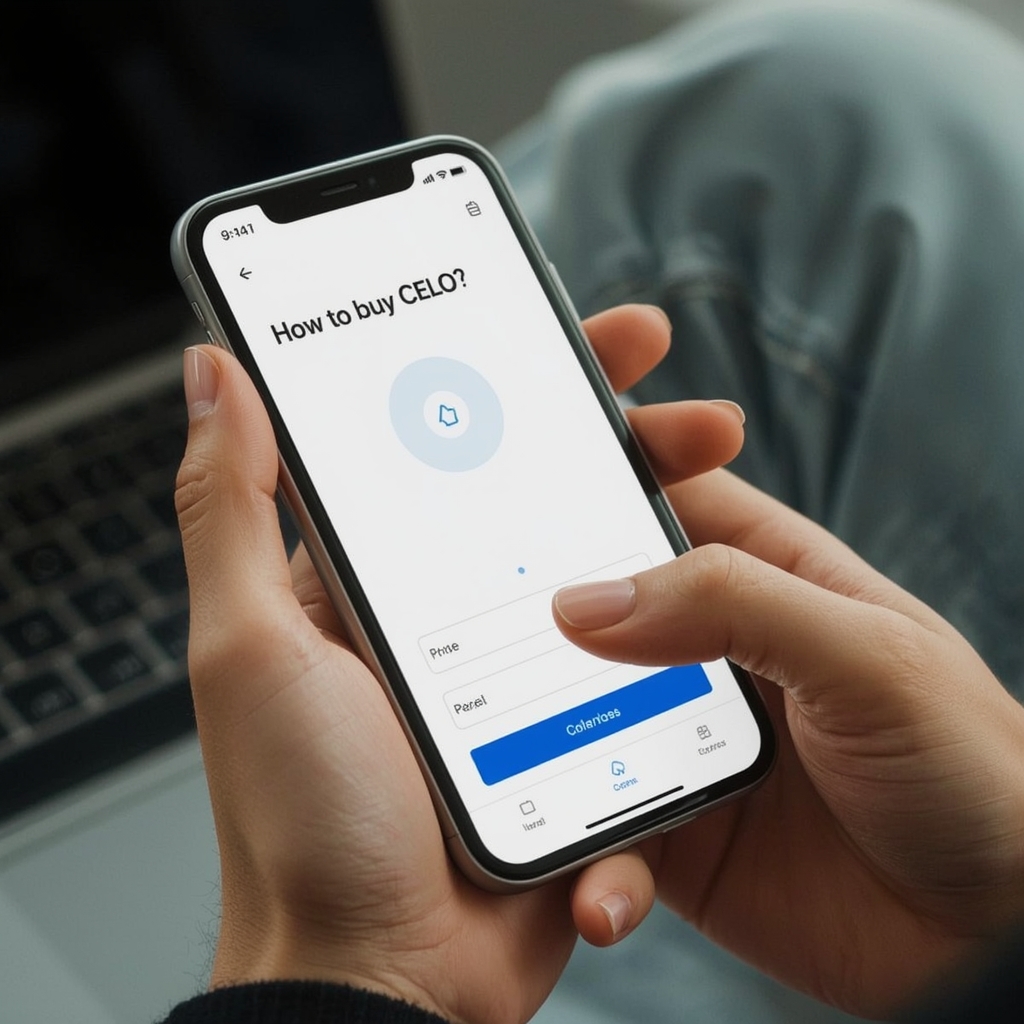
Centralized exchanges typically offer features like liquidity, customer support, and fiat deposits. Decentralized options leverage smart contracts, letting you swap tokens directly from your wallet with no sign-ups. If you start on a CEX, you can later withdraw CELO to a self-custody wallet to use within the Celo ecosystem.
Compare Top Places to Buy CELO
Many reputable exchanges list CELO. Availability varies by country and may change, so confirm listings and compliance requirements (KYC/AML) for your location. The table below compares common options to help you decide. This is not an endorsement—just a neutral snapshot to guide research.
| Platform Type | Examples That List CELO | Fiat On-Ramp | Typical Fees | Pros | Considerations |
|---|---|---|---|---|---|
| Centralized Exchange (CEX) | Binance, Coinbase, Kraken, KuCoin | Card, bank transfer, sometimes P2P | Varies by tier; trading and deposit/withdrawal fees apply | High liquidity, easy onboarding, support | KYC required; withdrawal limits/processing times vary |
| Decentralized Exchange (DEX) | Ubeswap, Sushi on Celo, Uniswap (via supported deployments/bridges) | None direct; use fiat on-ramp then bridge/swap | Network gas + swap fee | Self-custody, no account, composable with DeFi | Needs a wallet; slippage and bridge steps add complexity |
Tip: If you want the simplest entry, a CEX with local fiat support is usually best. If you already hold crypto elsewhere, bridging to Celo and swapping on a DEX can be cost-effective due to Celo’s low fees.
How to Buy Celo on an Exchange: Step-by-Step
Here’s a clean, repeatable process for how to buy Celo on a centralized exchange. The exact screens differ per platform, but the flow is broadly similar:
- Create an account on a reputable exchange that lists CELO and supports your region. Use a strong password and enable two-factor authentication (2FA).
- Complete identity verification (KYC) if required. This unlocks higher limits and fiat funding methods.
- Deposit funds. Choose bank transfer for typically lower fees or a debit/credit card for speed. Alternatively, deposit a crypto you already own (e.g., USDT) and trade it for CELO.
- Navigate to the CELO market pair that matches your funding (e.g., CELO/USD, CELO/USDT, CELO/EUR).
- Select your order type: - Market order for immediate execution at the current price. - Limit order to set a specific price you’re willing to pay. - Recurring buy (if available) to dollar-cost average (DCA) over time.
- Review fees and confirm the purchase. Double-check the amount and that you’re buying CELO (not a similarly named token).
- Decide on custody. You can temporarily keep CELO on the exchange or withdraw to a self-custody wallet for full control.
Pro move: Practice with a small purchase first to learn the interface, then scale up once you’re comfortable.
Best Wallets for Celo (CELO): Custody Choices
Once you buy, choose how to store CELO. Custody affects security, convenience, and access to on-chain apps. The table below summarizes common wallet paths.
| Wallet Type | Examples | Security | Ease of Use | Best For |
|---|---|---|---|---|
| Custodial (Exchange Wallet) | Wallet inside your CEX account | Depends on platform; no seed phrase to manage | Very easy; no extra setup | Short-term holding, frequent trading |
| Mobile Self-Custody | Celo-native mobile wallets, multi-chain wallets | You hold keys; protect seed phrase | Easy; great for payments and dApps | Everyday use, on-the-go DeFi |
| Hardware Wallet | Ledger, Trezor (via compatible apps) | Highest; keys stay offline | Moderate; initial setup required | Long-term storage, higher balances |
Important: Back up your seed phrase offline and test a small withdrawal first. For mobile-first payments on Celo, a self-custody mobile wallet offers a smooth, low-fee experience.
How to Buy Celo with Fiat: Card, Bank, P2P
If your top priority is simplicity, a fiat on-ramp is the most direct route to CELO. Below are common methods you can weigh by speed, cost, and convenience:
Card (debit/credit): Fastest for beginners. Fees are higher than bank transfers, and some banks may block crypto purchases. Make sure your card issuer allows crypto transactions.
Bank transfer: Often the lowest cost, especially for larger amounts. Settlement can take longer (from minutes to a few business days, depending on region and rails like ACH, SEPA, Faster Payments).
P2P marketplace (if supported by your exchange): Lets you buy from verified sellers using local payment methods. Always follow escrow rules and platform safety guidelines.
Once funded, search for CELO and execute your buy. If your exchange doesn’t support CELO in your currency, you can purchase a liquid stablecoin (like USDT or USDC) and then trade the stablecoin for CELO.
How to Buy Celo On-Chain via DEX and Bridges
Prefer self-custody and on-chain swaps? You can buy CELO via a DEX. There are two common flows: start on Celo or bridge to Celo from another network.
Start on Celo: If your wallet already holds Celo assets or a small amount of CELO for gas, connect to a Celo DEX such as Ubeswap or Sushi’s Celo deployment. Select a trading pair (for example, cUSD to CELO), set slippage tolerance, and confirm the swap.
Bridge from another chain: If your funds are on Ethereum, Polygon, or another network, use a reputable cross-chain bridge that supports Celo. Bridge a stablecoin (e.g., USDC) or CELO itself if supported. Once assets arrive on Celo, swap to CELO on a DEX if needed. Be mindful of bridge fees, confirmation times, and the need for a small amount of CELO on arrival for gas.
Risk note: Only use well-known bridges and DEXs. Double-check URLs, chain settings in your wallet, and token contract addresses before swapping.
Fees, Order Types, and Timing Tips
Understanding fees and order mechanics can save you money when learning how to buy Celo. Here’s what to watch:
Exchange fees: You’ll typically pay trading fees and potentially deposit/withdrawal fees. Trading tiers may reduce costs as your volume increases. Bank transfers often cost less than card purchases.
Network fees: Celo is known for low gas fees, which makes on-chain use affordable. Still, always keep a small buffer of CELO to cover transactions if you self-custody.
Order types: Market orders fill instantly but may incur slippage in thin markets. Limit orders give you price control and can be combined with good ‘til canceled (GTC) settings to wait for a better entry. Some platforms offer recurring buys to automate dollar-cost averaging (DCA).
Timing: Volatility can be an opportunity and a risk. If you’re worried about price swings, consider splitting a large purchase into smaller tranches over time. Avoid overpaying on spreads during low-liquidity hours.
Pro tip: Preview your full cost before confirming—look at the quote, fees, and expected slippage. If a DEX quote looks off, try adjusting slippage, changing the route, or comparing a second DEX aggregator.
Safety Checklist and Common Mistakes
Buying CELO is only half the journey—keeping it safe is just as important. Use this quick checklist to stay protected:
- Enable 2FA and anti-phishing codes on your exchange account.
- Use a hardware wallet or trusted mobile wallet for larger balances.
- Back up seed phrases offline; never share them or store them in cloud notes.
- Whitelist withdrawal addresses and test with small amounts first.
- Verify official URLs; bookmark your exchange, bridge, and DEX sites.
- Beware of fake support agents, airdrops, or “recovery” tools.
- Keep software up to date and scan for malware regularly.
Common mistakes to avoid when figuring out how to buy Celo:
Sending to the wrong network: If you withdraw CELO or a stablecoin to the wrong chain or address format, funds may be lost. Always confirm the Celo network and accurate address.
Ignoring fees and slippage: Tiny changes compound. Compare card vs. bank, market vs. limit orders, and DEX quotes vs. aggregators.
Over-consolidating funds: Spreading holdings across a hardware wallet for long-term storage and a mobile wallet for everyday use can balance security and convenience.
Skipping small test transactions: A $5–$20 test save can prevent costly errors when bridging or withdrawing for the first time.
FAQs: How to Buy Celo Like a Pro
What’s the fastest way to buy CELO? Usually a debit/credit card on a major exchange that supports your region. It trades speed for higher fees. If you already hold crypto, swapping on a DEX can also be quick.
What’s the cheapest way to buy CELO? Bank transfers to a low-fee exchange and limit orders to control price. On-chain, Celo’s low gas fees help, but compare bridge costs if moving funds cross-chain.
Can I buy CELO without KYC? Many DEXs do not require KYC, but they also don’t accept fiat. You’ll need crypto in a wallet first. Always follow local laws.
Do I need CELO to use the Celo network? Yes, a small amount of CELO covers gas. Some wallets support fee abstractions with certain assets, but keeping a buffer of CELO is best practice.
How do I store CELO safely? For long-term storage, a hardware wallet is a strong choice. For daily transactions and dApps, a trusted mobile wallet works well. Always back up your seed phrase offline.
Advanced Tips: DCA, Recurring Buys, and Withdrawals
If you plan to build a position over time, consider strategies that smooth volatility and optimize costs:
Dollar-cost averaging (DCA): Set recurring buys (weekly or monthly) on an exchange. This automates entries and reduces the impact of single-day price swings.
Limit orders: Place staggered limit orders below the current price to capture dips. Make sure funds are available and orders are set with the correct time-in-force settings.
Batch withdrawals: If you make frequent purchases, consolidate them and withdraw to your wallet in fewer, larger transactions to reduce per-withdrawal fees. Always verify the network and address before sending.
Cross-chain routing: If your exchange fees for CELO withdrawals are high, consider withdrawing a stablecoin to a cheaper network, then bridging to Celo and swapping to CELO. Compare all-in costs first.
Putting It All Together: Your First CELO Purchase
Here’s a concise roadmap you can follow today:
- Pick a platform: Choose a compliant exchange in your country or decide to go self-custody and use a DEX after bridging funds.
- Set up security: Strong password, 2FA, and anti-phishing code. If going self-custody, prepare a wallet and write down your seed phrase offline.
- Fund your account: Bank transfer for lower fees, card for speed, or deposit crypto.
- Execute the buy: Use market for convenience, limit for control, or schedule recurring buys for DCA.
- Withdraw and explore: Move CELO to your wallet to try Celo dApps, pay low gas, and interact with stable assets like cUSD.
As you gain experience, refine your process—compare fees across platforms, optimize order types, and improve your storage setup. With a clear plan and good security hygiene, learning how to buy Celo can be straightforward and stress-free.